
Automations and scenarios
The things you repeat identically every time, the building can do by itself: warm the water before somebody arrives, switch everything off when they leave, close the gate at midnight.
The same old problem
Running a place that empties and fills again eats half your time in tiny identical gestures: switch on, switch off, check whether someone left a light burning. None of them is hard work. It is the sum that wears you down, and above all the chance of forgetting: a water heater left on for three empty days shows up on the bill.
What it actually is
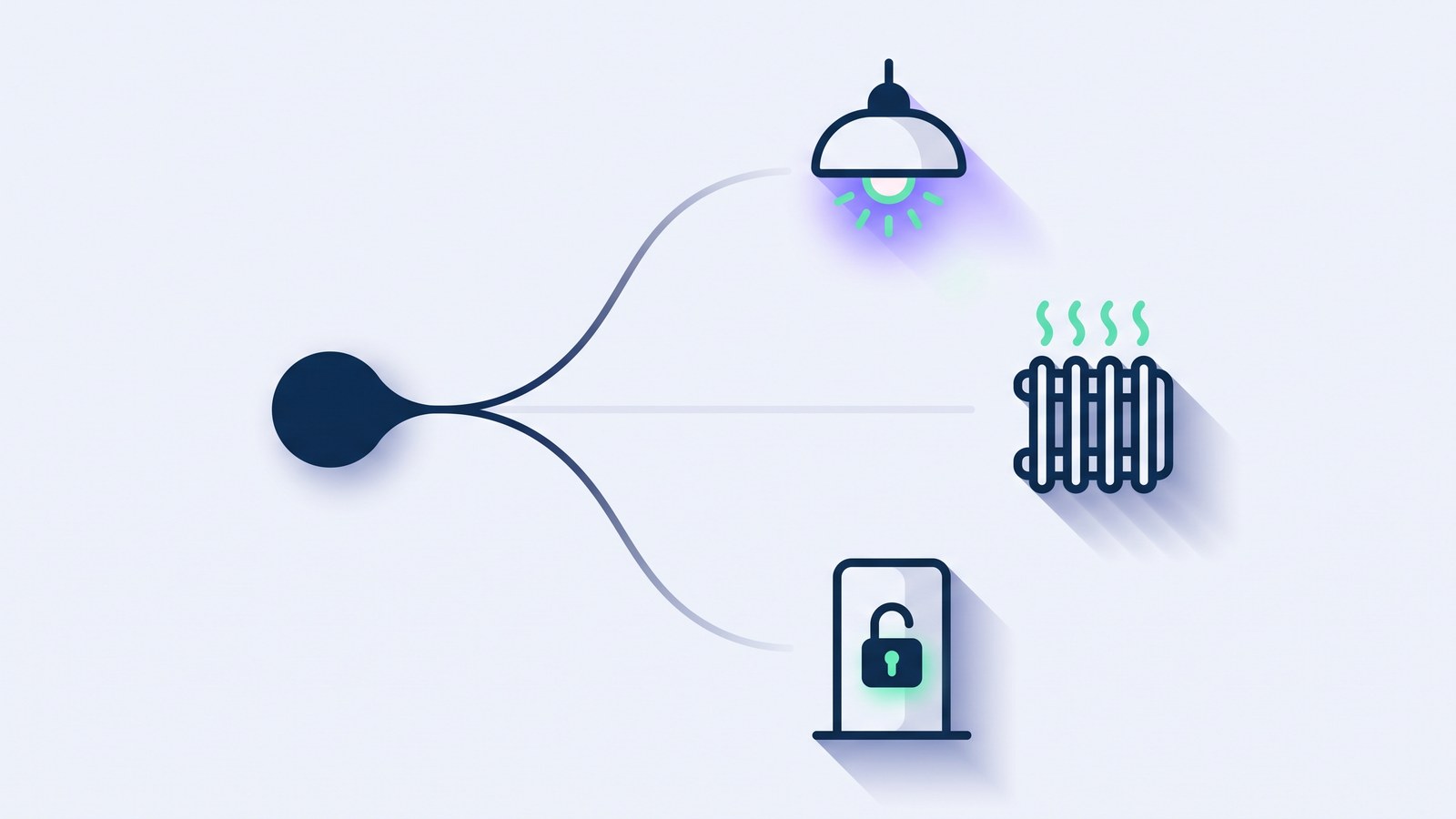
An automation, in Roraima, is a line of actions with a condition in front of it. It reads like a sentence: when this happens, do these things. The actions are those of your supported devices: switch on, switch off, open, set a temperature. They can span several devices at once, with a pause in between if you want one.
The classic rental example: half an hour before arrival the heating and the hall light come on, and at departure everything goes off and the gate closes again.
What sets it off
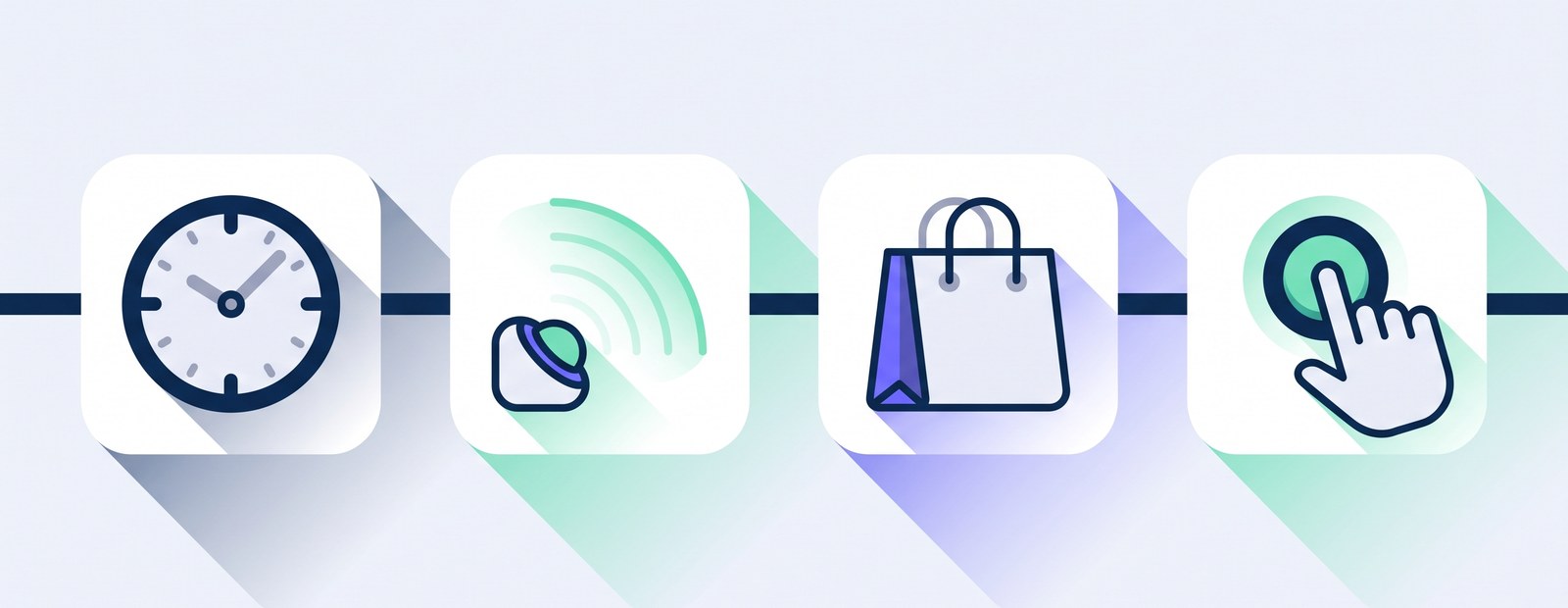
A time
Every day at seven, Monday mornings, the last day of the month. The classic on-and-off at a fixed hour.
A device that changes
The door opening, the temperature dropping below a threshold, a sensor spotting water on the floor.
A purchase
Somebody buys a service and the automation runs for them, tied to that booking and no other.
A button
No condition at all: it sits there and runs when you press it, or when the customer presses it from their panel.
You can also just describe it
If assembling it piece by piece feels tedious, you can write it in words: "when somebody opens the door after eleven at night, turn the hall light on for five minutes". The assistant turns that into a real automation, which you then read over and correct before switching it on. The service draws on the credits included in your plan.
Whatever the assistant writes never runs on its own: it stays a proposal until you say yes.
Tying it to a booking
On anything you sell you can name two automations: an opening one and a closing one. The first runs when access is activated, the second fires by itself at the end of the booked period, with nobody having to remember it.
That is where the saving shows up: nothing stays running for days because the last guest left in a hurry.
Try it before you trust it
Every automation can be run by hand to see what really happens, and each run is written down along with how it went. If something did not work, the reason is right there — no guesswork.
There are deliberate brakes, too: one automation cannot set off another forever, and there is a ceiling on how often it can fire in the same stretch of time. That is what stops a badly written rule from clicking a relay all night.
Start with a single gesture
Take the thing you repeat most often and hand it over. The others follow by themselves, one at a time.
See the plans Talk to us