
Guest documents and legal filings
The system collects your guests' details while they are still at home. What is left for you is a check and a button, instead of an evening spent copying out documents.

The same old problem
Anyone hosting in Italy has to report the details of everyone sleeping under their roof to the police, within twenty-four hours of arrival. It is a legal duty, not an option, and it applies to a single night too.
In practice: the guest turns up tired at ten at night, you ask for their document, photograph it or copy it by hand, and the next day you sit at a computer retyping names, dates and numbers into a portal. Across three flats, every week.
How it changes with Roraima
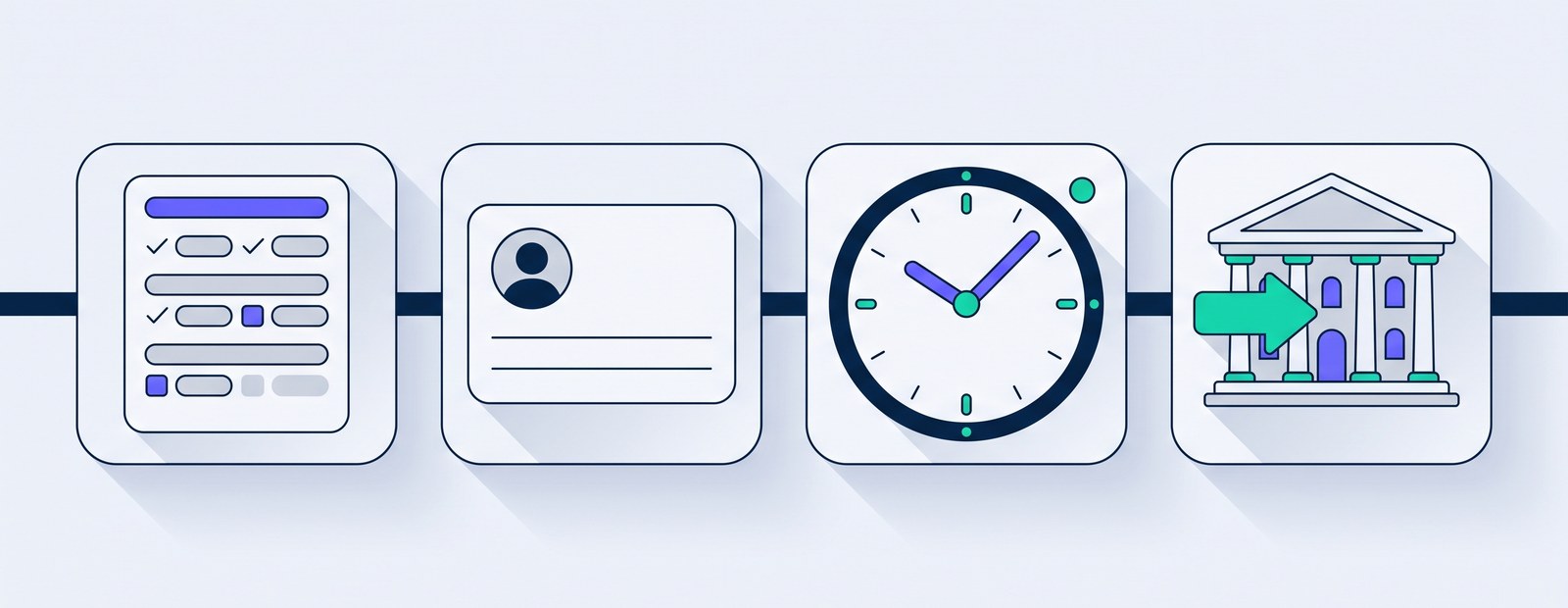
The guest gets their link and fills in their own details before setting off, unhurried, from their own sofa. If there are several of them, each fills in their own. By the time they arrive, it is all there.
-
The guest fills it in
Name, date and place of birth, nationality, document type and number. The same things you would ask at the door, but written by them and without a queue behind.
-
You check
You see the full record and what is missing. If something looks wrong, the guest is asked to correct it before they even set out.
-
You register the arrival
One click, when the guest is genuinely there. That is the moment the twenty-four hours start counting.
-
The filing goes out
The system prepares and sends it, then reports back. If something jams it tells you, rather than leaving you to find out later. What the portal's error messages mean, and how to correct a rejected form, is explained in the guide to errors in guest forms.
Regional statistics too
Besides the police, many Italian regions ask for tourist movement data. Roraima prepares that as well, and since every region has its own portal and its own rules, it is switched on region by region: active where it is supported, and off where it is not, rather than pretending to work. Today it is on in Lazio, Sardinia and Liguria, the three Italian regions for which we have written a guide to the ROSS 1000 portal, with the deadlines and how to upload the file.
The credentials stay yours
The obligation is in your name, not the platform's, so the portal credentials are yours as well: you enter them once and they are kept encrypted. If you remember the digital certificate that had to be renewed every two years, the guide on the expired certificate explains how to log in to the portal today, and how to generate the key Roraima uses to send the forms on your behalf.
If you do not set them up, Roraima still collects the guest's details for identity checks but sends nothing: you will file it by hand, as before. No surprises, no duty quietly assumed on your behalf.
Who says the guest has arrived
You do, with a button. Not the payment and not the clock, because that is when the legal clock starts, and a machine announcing an arrival nobody witnessed would be recording something untrue. There is more on the self check-in page.
The data does not stay forever
Guests' documents and personal details have a limited life: they are kept encrypted for as long as needed and then deleted automatically. You do not have to remember, and you are not left holding an archive of other people's papers for years.
If you do not let in Italy
Obligations differ from country to country, and Roraima currently files for Italy. Elsewhere, collecting details and verifying the guest work just the same: what is missing is the automatic filing, which stays yours to handle under local rules.
Take the worst part off your hands
Data collection works on a single property. Run it for a few bookings and see how much time comes back.
See the plans Talk to us