
Coin-operated washing machine for B&B, but paid by phone
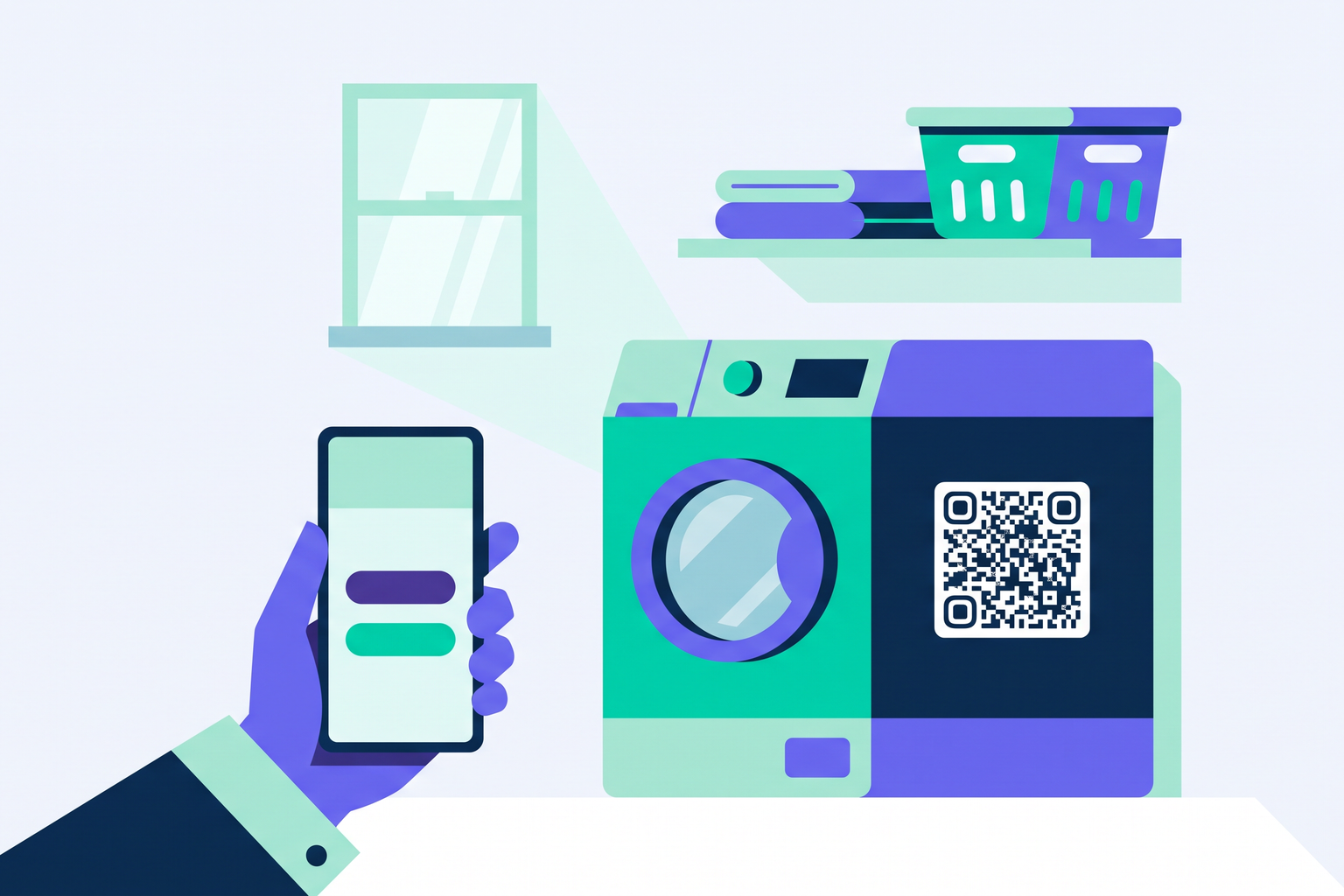
Take a B&B with six rooms and a household washing machine in a room on the ground floor. With Roraima the owner makes it available to guests for a fee, and they pay for it and start it from their phones.
How the owner sets it up
Guests who stay for a week often ask whether they can do a load of washing, but until now the owner has either let them use the machine for free or kept it for herself, because charging for it meant keeping track of money and times. She does not need to replace the machine to charge for it. She chooses a smart plug from the supported devices on Roraima, one suited to the washing machine's power rating, and plugs the machine into it as she would into an ordinary socket.
Once the plug has been added, she asks the Roraima assistant to create the automations that switch it on and off on her terms. She then creates the listing ‘Washing machine’ with a programme called ‘Wash’ that costs one virtual token and lasts two and a half hours, a little longer than the machine's longest wash, so that the plug switches off when the cycle has already finished. At this point she decides quantities and prices and sets up her offers, for example one virtual token at €2.50 and a pack of three at €6. On the listing page she enters how many days the virtual tokens remain valid, for example seven, so that buyers can see it before paying, and they are valid only on that washing machine. Before finishing she turns on the One buyer at a time option, downloads the QR code from the listing page, prints it and sticks it on the washing machine.
What the guest does
A guest who wants to do some laundry scans the QR code with their phone's camera, without installing any app, and sees two buttons on the screen, one to buy and one to use what has already been bought. They choose a pack and pay by card, and the payment goes straight to the owner's Stripe account. Right after that they press ‘Wash’, so that Roraima deducts one virtual token and switches the plug on. The guest selects the programme on the washing machine and presses start as they would at home, and after two and a half hours the plug switches itself off. To prevent anyone starting it from elsewhere, the wash begins only if that phone has just scanned one of the property's QR codes, so that the service starts only when the person is on the premises.
The virtual tokens a guest has left appear on a personal page, where they can buy more when they run out, and if they prefer they can buy them from the property's online shop before arriving. If the phone's battery runs out halfway through, the wash carries on and the plug switches off by itself at the end, while if they change phone, their email address is enough to receive a code and find the remaining virtual tokens again. If another guest finds the washing machine in use in the meantime, they see on their phone when it will be free again, and their virtual tokens stay untouched.
What it costs the owner
Roraima does not take any commission on sales, because the guest's payment goes directly to the owner's Stripe account and the only cost of collecting it is the card fee, which goes to Stripe and is small. Switching on, switching off and sales, however, use Roraima credits. Each month the seller receives free credits, and for the washing machine of a six-room B&B they are enough.
If the property already uses Home Assistant
If you already use Home Assistant at your property, you do not have to replace anything. In the vendor panel you add a device connected through Home Assistant and choose the plug you need, so that Roraima reads and controls only that one. For the connection you need an address for your Home Assistant that can be reached from the internet and starts with https, either your own or one from Home Assistant's paid remote access service, and a long-lived access key, created in your Home Assistant profile and kept like a password, because it gives access to the installation. All the steps are in the sellers' guide to managing devices.
Other equipment, and moving on from the coin box
With the same approach you can charge for other equipment you already have at the property, starting with the tumble dryer next to the washing machine. At a campsite you can offer the hot shower in this way too, by having a technician connect a supported device that controls the valve or the water heating, or the barrier of a car park with a relay wired to its control.
Anyone who already charges for the washing machine with tokens or coins today can move to virtual tokens without changing machine. The washing machine stays where it is, it is connected to a supported device that controls its start, the listing is created on Roraima and the QR code is stuck on the machine, and the coin box is removed once the connection works. On commercial washing machines the relay goes on the coin box input and is connected by an electrician or the machine's service technician. The takings belong to the owner, who records them just as with the coin box.
If you have equipment that you currently leave idle or let guests use for free, you can see how to set it up on the page about selling equipment with virtual tokens and open your profile from the sign-up page for owners.